Is Your WiFi Problem Actually Worth $300-500?
Your bedroom WiFi is terrible. Netflix buffers constantly. Video calls freeze. Your kid's gaming console can't stay connected. So you're researching mesh WiFi systems after seeing ads promising "whole home coverage."
But here's what those ads don't tell you: most WiFi dead zones have cheaper solutions. Before dropping $400 on a mesh system, you need to diagnose the real problem. Sometimes you just need to move your router or upgrade from a 2015 model. Other times, mesh WiFi is absolutely the right answer.
This guide helps you figure out which situation you're in.
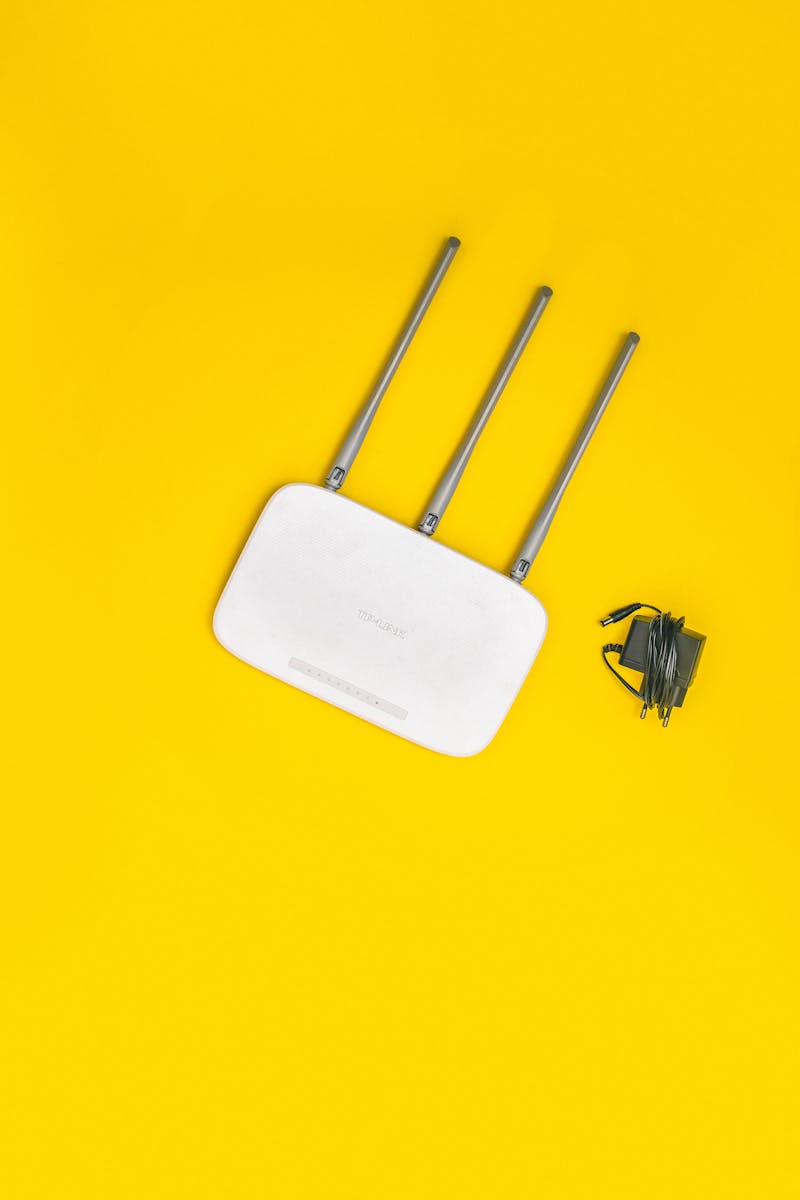
When Mesh WiFi Actually Solves Your Problem
You genuinely need mesh WiFi if:
Your house is over 2,500 square feet and your router sits in a corner (signal can't reach opposite side) You have a multi-story home where the router is on one floor and devices on another barely connect Your house has thick plaster walls, brick, or concrete that blocks WiFi signals You've already tried moving your router to a central location and still have dead zones You have 20+ connected devices (smart home gear, phones, laptops, tablets)
You probably DON'T need mesh WiFi if:
Your apartment or house is under 1,500 square feet Your router is 5+ years old (a new quality router would solve it) Your router sits in a closet or corner (move it to a central, elevated spot first) You only have dead zones in one specific room (a single access point might work) Your internet plan is slow (mesh won't fix a 25 Mbps connection)
How Mesh WiFi Actually Works (The Simple Version)
Traditional setup: One router broadcasts WiFi from a single point. The farther you get, the weaker the signal.
Mesh setup: One main router plus 2-4 satellite units (nodes) placed around your home. They create overlapping coverage zones and your devices automatically connect to whichever node is strongest.
The key difference: Unlike WiFi extenders that create separate networks (forcing you to manually switch from "HomeWiFi" to "HomeWiFi_EXT"), mesh creates one network name. Your phone seamlessly hands off between nodes as you walk around, like how cell towers work.
The Biggest Mesh WiFi Setup Mistake (And How to Avoid It)
Most people place their mesh nodes wrong, wasting money on extra units they don't need or creating overlap that causes interference.
Wrong: Buying a 3-pack and putting all nodes as far apart as possible to "maximize coverage."
Right: Place nodes where they can still see the main router or another node with strong signal. If the bedroom node is too far from the router, it connects with weak signal and just extends that weak signal further.
Practical placement strategy:
- Main router goes in a central, elevated location (not in a basement closet)
- First node goes halfway between router and dead zone
- Check signal strength with the mesh app before placing the second node
- Aim for 30-50 feet between nodes in typical homes (less if you have thick walls)
Walk your house with the mesh app and look for signal strength. Place nodes where they show "good" or "great" connection to the router, not in the actual dead zones.
Dual-Band vs Tri-Band: When the Extra $150 Matters
Dual-band mesh ($200-350): Uses 2.4GHz and 5GHz bands. Nodes talk to each other using the same bands your devices use, which can create congestion. Fine for most homes with moderate internet use.
Tri-band mesh ($350-600): Adds a dedicated 5GHz band just for nodes to communicate with each other (called backhaul). Your devices get full access to the other bands.
You need tri-band if:
- You have 30+ connected devices
- You stream 4K on multiple TVs simultaneously
- You have gigabit internet (500+ Mbps)
- Your house is over 4,000 square feet requiring 4+ nodes
Dual-band is fine if:
- You have under 20 devices
- Your internet is 300 Mbps or less
- You're just trying to fix dead zones for basic browsing and streaming
Why Your Mesh WiFi Is Slow After Setup
Bought mesh WiFi and it's still slow? Common issues:
Problem 1: Nodes placed in dead zones instead of between router and dead zones Fix: Move nodes closer to router where they get stronger signal. Use app to check connection quality.
Problem 2: Your internet plan is the bottleneck Fix: Mesh can't make a 50 Mbps plan faster. Check your actual internet speed (not WiFi speed). If your plan is slow, upgrade that first.
Problem 3: Too many devices on 2.4GHz band Fix: Modern devices should use 5GHz when possible. Check your mesh app and manually assign heavy users (laptops, streaming devices) to 5GHz if your system allows band steering.
Problem 4: Wireless backhaul on dual-band system Fix: If possible, connect nodes to router with Ethernet cables (wired backhaul). Dramatically improves performance but requires running cables.
Mesh WiFi vs Just Buying a Better Router
Scenario 1: 1,200 sq ft apartment with WiFi issues Solution: Don't buy mesh. Spend $150 on a quality WiFi 6 router (like TP-Link Archer AX55). Your old router is probably the problem, not your space size.
Scenario 2: 3,000 sq ft two-story house, router on first floor Solution: Mesh WiFi makes sense. A 2-pack system ($250-400) will cover both floors effectively.
Scenario 3: Dead zone in single room (home office in garage) Solution: Buy a single access point ($80-120) and run Ethernet to it. Cheaper and more reliable than mesh.
Scenario 4: Ranch-style house, long and narrow Solution: Perfect for mesh. Linear layout means you can place nodes down the length of the house.
The Real Cost Breakdown
Quality standalone router: $100-200 Covers 1,500-2,500 sq ft in typical construction
2-pack mesh system (dual-band): $200-350 Covers 3,000-4,000 sq ft Examples: TP-Link Deco, Google Nest WiFi
3-pack mesh system (tri-band): $400-600 Covers 5,000-6,000 sq ft Examples: Eero Pro 6E, Netgear Orbi
Single access point + Ethernet: $80-150 Covers one specific dead zone Requires running cable
Common Dead Zone Fixes That Don't Require Mesh
Before buying mesh, try these:
1. Move your router Central, elevated location (top of bookshelf) beats corner of basement every time. Free solution.
2. Change WiFi channel Your neighbors' routers might be interfering. Use WiFi analyzer app to find clearest channel. Free.
3. Upgrade to WiFi 6 If your router is 5+ years old, a new WiFi 6 router ($150) might solve everything. Not free, but cheaper than mesh.
4. Check for interference Microwaves, baby monitors, and cordless phones operate on 2.4GHz. Move router away from these. Free.
5. Use Ethernet for stationary devices Gaming console, smart TV, desktop PC don't need WiFi. Wire them directly. Frees up wireless bandwidth.
When Mesh WiFi Is Worth Every Penny
Despite everything above, mesh WiFi is genuinely the best solution for:
New construction homes with weird layouts: Open floor plans with few walls but lots of square footage Multi-story homes: 3+ floors where one router can't physically reach all levels Homes with interference: Old houses with plaster and wire lath that block signals Smart home enthusiasts: 40+ connected devices need distributed load Work-from-home professionals: Need bulletproof connection in home office
Setup Time Reality Check
Mesh WiFi: 20-30 minutes with smartphone app. Plug in nodes, follow prompts, done. Actually is as easy as advertised.
Traditional router: 10-15 minutes. Slightly faster but limited by single point of coverage.
Access point with Ethernet: 15 minutes setup plus however long it takes to run cable. More work but best performance.
📺 5-min explainer — TechQuickie (Linus Tech Tips)
The Bottom Line: Decision Framework
Start with the cheapest solution:
- Move router to central location (free)
- Check if router is 5+ years old, buy new WiFi 6 router ($150)
- If still have issues, identify if it's whole-home or single-room problem
- Single room: Access point with cable ($100)
- Whole home: Mesh WiFi ($250-500)
Don't buy mesh WiFi because:
- It seems cool or futuristic
- Your router is old (just buy a better router)
- You have one dead zone in one room
- Your internet plan is slow (mesh can't fix that)
Do buy mesh WiFi because:
- You've tried cheaper solutions and still have coverage gaps
- Your home layout genuinely needs multiple transmission points
- You value seamless roaming between nodes
- You're willing to pay for convenience and whole-home coverage
Mesh WiFi solves specific problems brilliantly. But it's not magic, and it's not always the answer. Diagnose your actual issue first, try simpler solutions, then invest in mesh if you genuinely need it. Your wallet will thank you.